 RobotBoxe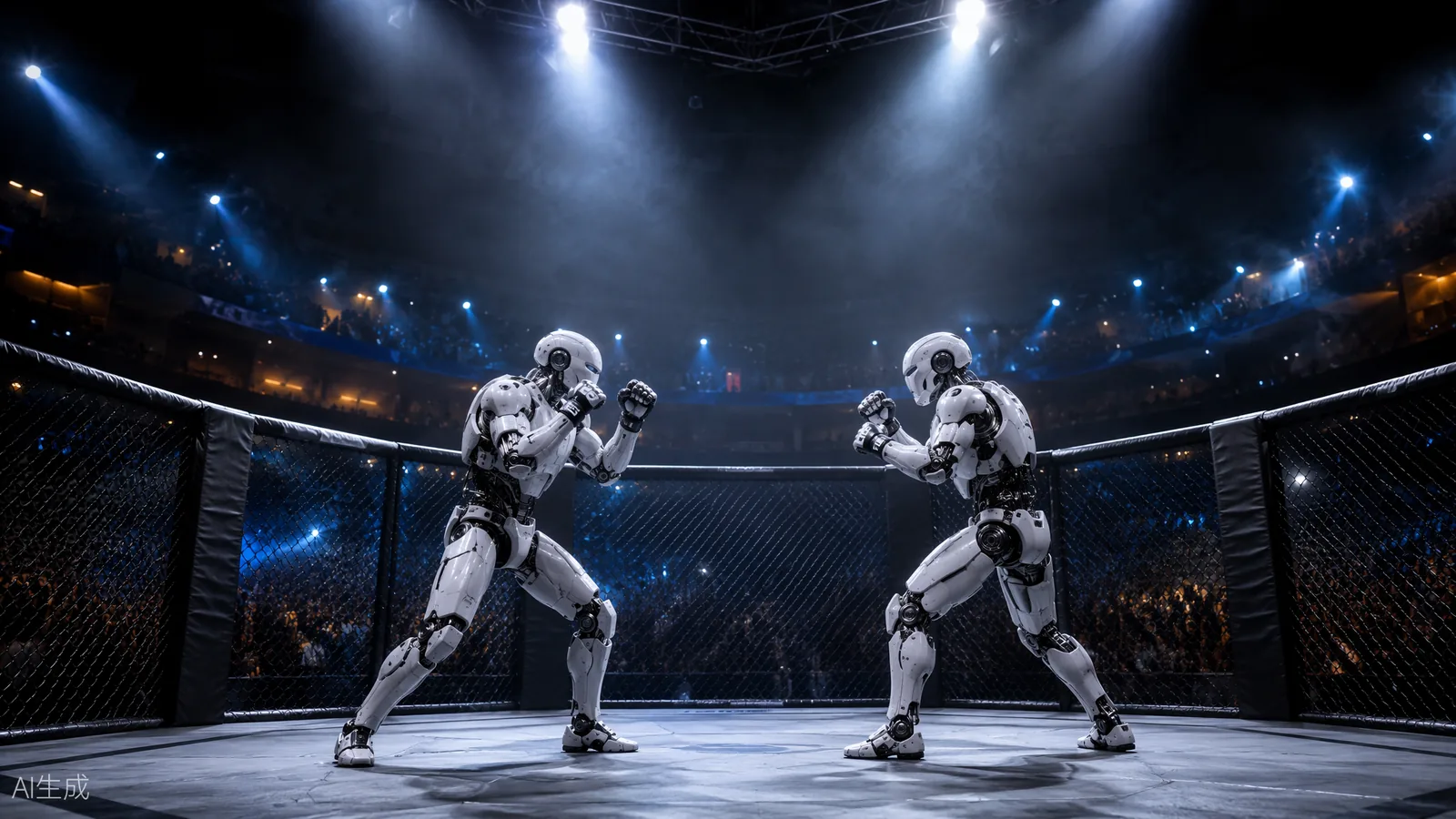
If you've seen videos of two human-sized humanoid robots trading punches in a cage flood your Instagram or TikTok feed this week, you've already met URKL — even if you didn't know its name. Search interest in the league exploded worldwide overnight, with Google recording all-time highs for terms like "urkl robot", "robot fight" and "t800 robot" within 24 hours of the first event.
This guide explains everything that is actually known so far: what URKL is, who runs it, what happened at the opening event in Shenzhen, and why people who follow combat sports and robotics are both paying attention. It is the starting point of our URKL coverage, where every guide and story about the league is collected.
What is URKL?
URKL stands for Ultimate Robot Knockout Legend. Its full Chinese name, 众擎URKL全球人形机器人自由格斗联赛, translates as the URKL Global Humanoid Robot Free Combat League — and that name tells you the two things that make it different from anything before it:
- It is a league, not a demo. EngineAI, the company behind it, presents URKL as a recurring competition with a "show + tournament" format, closer to a fight promotion than to a robotics trade-fair exhibition.
- The fighters are full-size humanoid robots. Not wheeled machines with spinning blades like in BattleBots — bipedal, human-shaped robots that walk into an arena and strike each other.
The concept had been teased for months with short clips of robots sparring, but until this week nobody had seen full-size humanoids actually compete in an organized event.
The Shenzhen opening event: what happened on July 16, 2026
The inaugural URKL gala took place on July 16, 2026 in Shenzhen, the southern Chinese megacity often described as the world's hardware capital. According to Chinese press coverage of the event:
- The evening marked the first public full-size combat of the T800, EngineAI's flagship humanoid robot.
- The event was broadcast on Guangdong TV, one of China's major provincial channels — a sign that organizers are targeting mainstream audiences, not just engineers.
- Martial arts film legend Donnie Yen attended the gala, underlining the league's ambition to sit at the crossroads of combat sports culture and technology entertainment.
Within hours, short clips from the event were circulating on Instagram, TikTok and X, and worldwide search interest went vertical — even though, at the time of writing, almost no written coverage exists outside Chinese and Russian media.
Meet the T800, the league's first fighter
The star of URKL's opening night is the EngineAI T800 — and yes, the name is a deliberate nod to the Terminator. It is a full-size humanoid platform, standing about 173 cm tall, with a maximum joint torque of around 450 N·m and 4 to 5 hours of battery life. Chinese media report a price between roughly 180,000 and 360,000 yuan depending on the configuration, positioning it as a professional development platform rather than a consumer product.
What matters for fight fans is less the datasheet than the style: the T800 walks, guards, throws punches and kicks, and — crucially — can get knocked down and get back up. We will publish a full technical breakdown separately; this guide sticks to what the league is and why it matters.
How does a robot fight actually work?
EngineAI describes URKL's format as a blend of show and competition. The practical details — number of rounds, judging criteria, how much of the movement is autonomous versus human-supervised — are still being formalized publicly, and this is one of the areas where the league will have to become more transparent as it grows.
What is clear from the first event:
- Fights take place in an arena setting in front of a live audience, with commentators and production values borrowed from combat sports.
- Robots compete under supervised conditions — like every humanoid robotics demo today, safety crews remain close.
- The league wants teams and personalities to emerge, the way stables and fighters do in MMA.
Why is the whole world searching for it right now?
Three reasons explain the spike. First, the spectacle is genuinely new: two-legged robots fighting in an organized league has never happened at this scale. Second, the content gap: outside of short social media clips, there is almost nothing to read about URKL in English or French — no official international broadcast, no detailed recap, no rules document translated. Third, the cultural timing: humanoid robots have been the biggest story in tech all year, and URKL turns that story into a sport.
That combination — massive curiosity, near-zero written coverage — is exactly why this site exists.
URKL vs UFC vs BattleBots: where does it fit?
URKL borrows its presentation from the UFC (arena, walkouts, knockout culture) but its athletes are machines. Compared to BattleBots or Robot Wars, the difference is fundamental: those machines are wheeled weapons platforms, while URKL fighters are humanoids — the fight looks like a human fight, with footwork, guard and strikes. And compared to a tech demo, URKL adds what demos lack: stakes, a league structure, and recurring events.
We will publish a full three-way comparison soon — it is its own fascinating story.
What happens next?
EngineAI has positioned URKL as a global league with recurring events, and the opening gala is explicitly presented as the first chapter. No official date for the second event has been announced yet — but the prize waiting at the end of the season is already known. The key questions for the coming months: will other robot manufacturers enter the league, will rules be formalized and published, and will an international broadcaster pick up the rights?
This page is the living hub of our URKL coverage — bookmark it. It will be updated with every confirmed development, and each new guide is linked from here: URKL rules explained for fans, how robot fighting works, the beginner's guide to robot fighting and the history from Real Steel to Shenzhen.