 RobotBoxe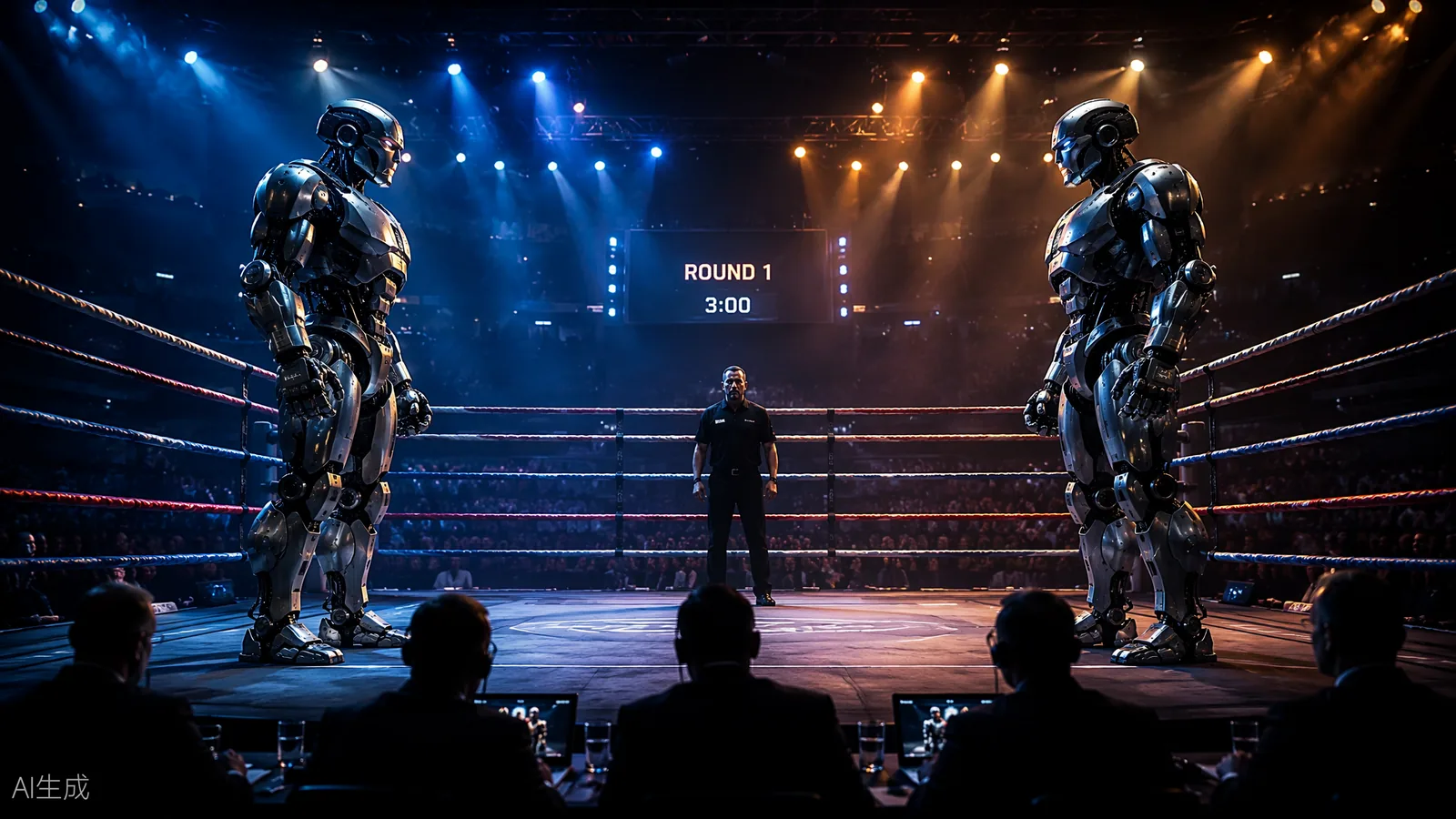
Every new sport has a moment when the casual viewer asks the same question: "OK, but what are the rules?" With robot fighting, the question matters twice as much, because the rulebook is what separates a genuine sport from two expensive machines breaking each other for clicks.
This guide walks through the URKL rule framework in plain English — what is known, what is enforced, and what is still unpublished. If you landed here before reading the basics, our pillar explainer on what URKL is covers the league, the teams and the gold belt; this page zooms in on the laws of the ring. And if you want the action itself decoded sequence by sequence, pair this with our guide to how a robot fight actually works.
Rule zero: everyone fights the same robot
The foundation of the entire URKL rulebook is not a foul or a scoring point — it is a design philosophy the organizers call "standardized hardware, differentiated algorithms." Every team receives the same full-size EngineAI T800 humanoid, free of charge. No team may swap in a bigger chassis, a heavier frame or a home-built machine.
For a fan, this is the best possible news. It means every fight starts from a position of perfect physical equality: same height, same reach, same power ceiling. When one robot dominates another, you are watching a difference in engineering intelligence, not in budget. It also means there are no weight classes to learn — there is only one class, and everyone is in it.
What teams are allowed to change
Within that fixed-hardware frame, URKL actively encourages teams to innovate in three areas:
- Protective solutions. Teams can design and fit their own custom armor and padding. This is where you will see visual personality emerge — one team's T800 might enter the ring looking sleek and minimal, another wrapped in bulky plating.
- Algorithm development. Motion control, balance recovery, striking patterns, defensive reactions: the robot's fighting brain is the team's own work, and it is the single biggest competitive lever.
- Engineering optimization. Fine-tuning within the platform's limits — cooling, structural reinforcement, durability work — is part of the game.
The official framing is "validating technology through competition": the ring is a stress test, and the rulebook is written to reward teams that make their robot smarter and tougher, not more destructive.
What is forbidden
One red line is stated explicitly in the league's published principles: destructive or excessively aggressive modifications are prohibited. URKL sells itself as "safe, non-violent engagement" at the engineering level — violent in sporting intensity, non-violent in intent. Nobody is fitting saw blades or hammers; this is humanoid boxing and kickboxing, not robot wars.
The practical effect for viewers: robots go down, robots get damaged, robots sometimes cannot continue — but the damage is the result of strikes and falls inside a sporting framework, not of weaponized hardware.
How a URKL fight is scored
When a bout goes the distance, judges decide the winner. Opening-night reporting describes four scoring areas, and learning them is the fastest way to watch like an insider:
- Effective strikes. Clean, meaningful punches and kicks that connect — not flailing volume. A robot that lands one crisp combination is doing better than one throwing ten off-balance swings.
- Body stability. Humanoid balance is brutally hard engineering, and the judges know it. A robot that absorbs a hit and stays upright is scoring; a robot wobbling after every exchange is losing points even if it never falls.
- Defensive and evasive ability. Footwork, guard, slipping strikes. Defense is scored as a positive skill, not just the absence of getting hit.
- Overall durability. Can the machine keep performing late in the fight? Degradation — slower recovery, visible damage, reduced mobility — counts against you.
Knockdowns sit inside this framework as the loudest signal of all: a fall is a stability collapse, a durability question and usually the result of an effective strike, all at once. Our analysis section goes deeper on why getting back up wins fights once the season's tactical patterns emerge.
How a fight can end
Based on the published format and opening-night footage, a URKL bout resolves in one of two broad ways:
- Stoppage. One robot can no longer meaningfully continue — knocked down and unable to rise, or too damaged to defend itself. Think of it as the robot-combat equivalent of a knockout or technical knockout.
- Decision. Both robots are still functional at the end, and the judges' scoring across the four criteria above decides the winner.
The exact round structure and time limits for season bouts have not been published in full detail yet. We will update this page — and bump its revision date — the moment an official rulebook drops.
The honest gaps: what is not public yet
A trustworthy rules guide has to say what it does not know. As of this writing, URKL has not publicly specified:
- the exact duration and number of rounds,
- the precise weighting of the four judging criteria,
- the degree of autonomy versus human supervision during bouts.
Until those details are official, treat any site quoting exact round times or control percentages as speculation. What the published framework and the July 16 opening night do establish is the skeleton above — and it is already enough to follow every fight intelligently.
What happens next
Rules in a young sport are a living document. As the season progresses through December 2026, expect the fine print — rounds, counts, weighting — to be formalized, and expect teams to push every gray zone the moment it appears. We will keep this page current.
Your next reads: the pillar guide to what URKL is for the league-wide picture, and how robot fighting works for the blow-by-blow mechanics of a bout. When the judging debates start — and they will — our analysis coverage of how URKL fights are won will be waiting.