 RobotBoxe
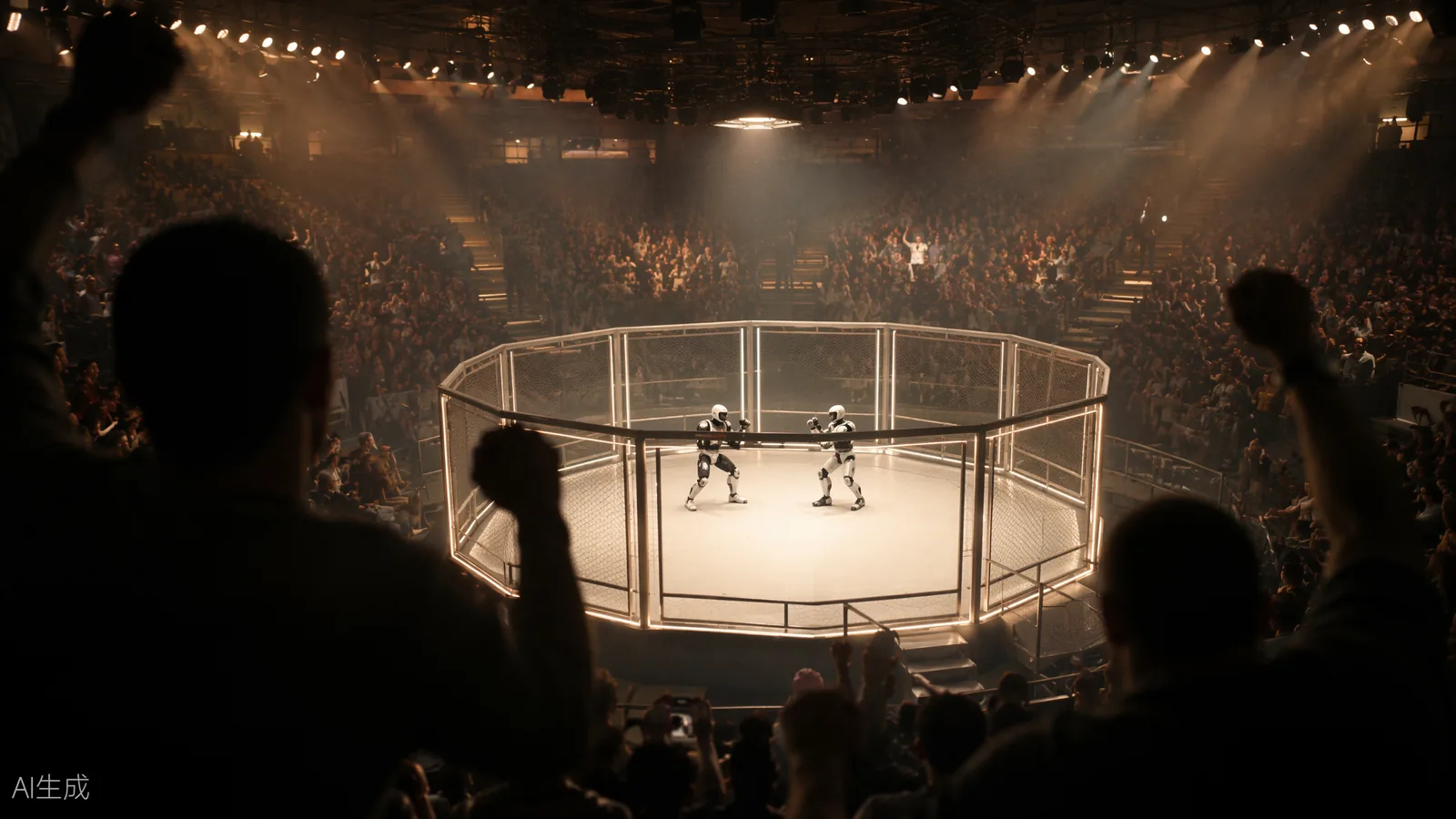
So you've seen a clip of two humanoid robots trading punches in a cage and you want in. Good news: robot fighting is far easier to follow than it looks. This guide gives you everything you need to enjoy your first fight — no engineering degree required.
If the league itself is new to you, start with our explainer on what URKL is, then come back here to learn how to watch.
What robot fighting actually is
Two full-size humanoid robots — in URKL's championship concept, every team fields the same EngineAI T800 platform — exchange strikes in a cage under arena lights. Teams can use remote control, teleoperation or autonomous policies under the official V2.0.0 rules, with software inspection and event supervision.
Think of it as a combat sport in which the athlete is a real machine that can fall, break and get back up. The people behind it still matter: preparation, movement design, tactics and repairs all influence what happens in the ring.
How a fight works: rounds and scoring
A standard URKL knockout match uses ROUND3: three rounds of five minutes, with three-minute rest intervals. The third-place match uses five rounds. Special exhibitions can use other formats, so always check the event context.
The current scoring is simple enough to memorize:
- Valid punch: 1 point
- Valid kick: 2 points
- Legal kick to the head: 5 points as a critical strike
- Qualifying taunt or celebration: 1 point, only during an opponent's knockdown count, for at least three seconds and once per round
Valid targets are the head, torso and legs. Contact with the arms scores nothing. The higher score wins a round, and the team with more round wins usually takes the match.
What a knockdown means
A robot is down when any part of its body other than the soles of its feet touches the floor. The referee starts a 30-second count, and the attacker must retreat to a neutral corner.
If the downed robot stands unassisted and resumes its fighting stance in time, the contest continues. Otherwise, the team's technical timeout begins, allowing emergency repairs or a registered reserve under the rules. A team with no robot capable of continuing loses by knockout.
Contrary to earlier exhibition summaries, the V2.0.0 table does not award a separate three-point bonus for every knockdown. Recovery is still crucial because it can prevent a lost round or a knockout.
What to watch during your first fight
Forget the technical jargon. Four things tell you who is performing well:
- Balance. The robot that stays on its feet through exchanges avoids counts and keeps attacking. A wobble after a kick is the robot version of a boxer on shaky legs.
- The guard. Robots that protect valid scoring areas between exchanges give away fewer clean hits—much like human boxing.
- The pace. Some teams go for volume, others wait and counter. Watch who imposes the rhythm and who is forced to react.
- Recovery. A fast, unassisted rise keeps the contest alive. Slow recovery brings the technical-timeout and replacement rules into play.
For a closer reading of those patterns, see our guide to how robot fighting works and our analysis of how URKL fights are won.
Who's behind the robots
Thirty-two teams qualified for URKL's first-season process, from universities such as Tsinghua, Stanford and UC Berkeley to private organizations. The official roadmap reduces the field through deployment and group stages before eight teams reach the finals.
Shared hardware does not mean identical performances. Software, movement preparation, tactics, armor choices within inspection rules and the ability to adapt after damage all shape a fighter. That is why the human corner remains central even when a team uses autonomous policies.
How to watch and what happens next
Start with the available recaps rather than a random repost. URKL News maintains a guide to where to watch URKL fights, distinguishing official Shenzhen footage from Shanghai highlights and confirming whether a livestream is actually scheduled.
The official roadmap places the semifinals and global final in December 2026–January 2027, with a gold belt and a prize pool announced at 10 million yuan at stake. Broad roadmap windows are not individual fight dates, so check the verified schedule before planning to watch live.
Welcome to the crowd. Once you can read balance, scoring and recovery, you are no longer just watching machines fall over—you are following a new sport.